
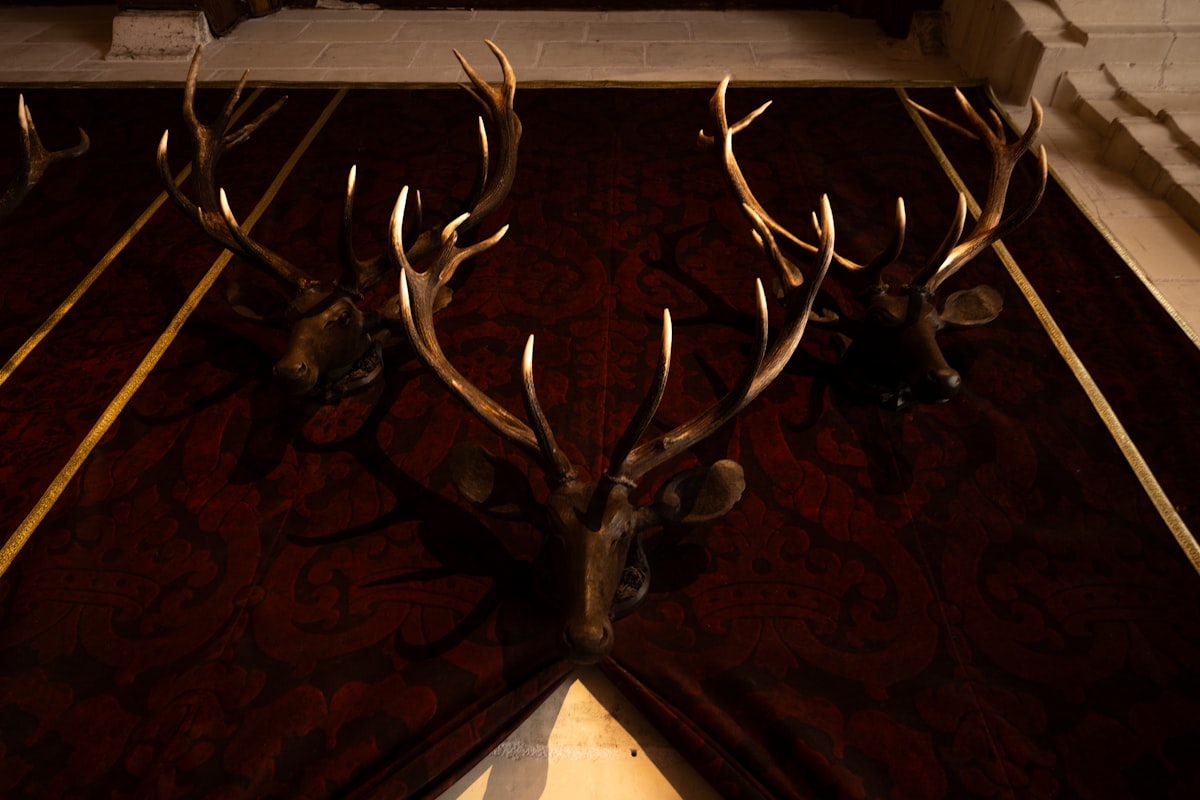
A good buck is the hunt of a season — sometimes a lifetime — and the mount should honor that. Outlaw Taxidermy builds mule deer and whitetail mounts with the eye set, ear detail and cape work that make a deer look alive on the wall. We bring the same specialist-level care we are known for on birds to every big game mount, for hunters across Utah, Idaho, Wyoming and Nevada.
Below is how we think about deer: the mount styles and roughly what each is best for, how the two species differ, exactly how to cape your buck in the field, and what our turnaround looks like.
Deer Taxidermy at a Glance
- Species
- Mule deer & whitetail
- Mount styles
- Shoulder, pedestal, European, antler
- Turnaround
- ~6–12 months
- Serving
- UT · ID · WY · NV
Choose Your Deer Mount
European Mount
Whitened skull-and-antler mount on a plaque or panel. Space-friendly, timeless, and perfect for multiple bucks a season.
Shoulder Mount
Head and shoulders posed to fit your wall — straight, semi-sneak, upright or turned. The way most hunters display a good buck.
Pedestal Mount
The buck on a floor or wall pedestal, viewable from more angles. A standout piece for a true trophy.
Mule Deer vs. Whitetail
| Mule Deer | Whitetail | |
|---|---|---|
| Frame & cape | Heavy, wide-bodied; darker rutting cape | Sleeker face and neck; lighter cape |
| Ears | Large, mule-like — key to a true look | Smaller, more refined |
| Antlers | Forked, wide spread | Single main beam, tall tines |
| Best-selling pose | Semi-sneak or upright | Alert, slightly turned |
We form and finish each species to look true to itself — a muley should read as a muley, not a big whitetail. Tell us which you have and the wall you are working with, and we will recommend the pose that fits.
How to Cape Your Buck (Field Checklist)
- Cut well behind the shoulders. Ring the body in a full circle a good distance back from the front legs — you can always trim, you cannot add hide back.
- Never cut up the throat. Do not open the brisket or throat if you want a shoulder mount; that is exactly where the seam shows.
- Leave the head attached. Cape down to the skull and let your taxidermist finish the face, or bring the whole head and cape in.
- Cool it fast. Get the hide out of the sun and off warm ground; heat is the enemy of hair.
- Freeze if it will be more than a day. Roll the cape hair-in, bag it, and freeze until you can get it to us.
Our Turnaround, Step by Step
Drop-off
Bring the caped, cooled or frozen hide and the antlers. Not sure how to cape? Call before you cut.
Tanning & form fitting
The cape is professionally tanned and fitted to a form matched to your buck and chosen pose.
Mounting & detailing
Eyes, ears, nose and facial detail set and groomed for a lifelike finish.
Finishing & pickup
Final grooming, sealing and mounting to your plaque or pedestal — then we call you to pick it up.
Frequently Asked Questions
How should I cape my deer for a shoulder mount?
Leave more hide than you think you need — cut in a full circle around the body well behind the front shoulders, and never up the throat or brisket. If you are not sure, get the whole caped head and hide to us cool or frozen and we will handle the caping.
Mule deer or whitetail — does it change the mount?
The process is similar, but the capes, ear structure and facial character differ, so we form and finish each to look true to the species. Tell us which you have when you drop off.
How long does a deer mount take?
Big game mounts require tanning and drying, so plan on roughly 6 to 12 months depending on our backlog and the mount style. We keep you posted along the way.
Can you fix a broken tine or an old, faded mount?
Yes — we repair broken antlers, rebuild damaged capes, and re-groom and re-color faded mounts. Bring it in and we will tell you honestly what is possible.